

Twenty years ago, “glamping” was barely a word. Today it’s a multi-hundred-million-pound sector within UK hospitality, and the trajectory over the next five years looks even more interesting.
The recently published Glamping Trends Report, combining a nationally representative survey of 1,502 UK adults, five years of booking data, and ten forward-looking trend frameworks developed by consumer intelligence agency Trajectory. We’ve dug into the report and pulled out the insights that matter most for owners of large group properties. If you run a big cottage, a converted barn, or a glamping estate that sleeps 8+, there’s a lot here that directly affects your business.
Let’s get into it.
Glamping Headline Numbers
The UK glamping market is projected to reach £350–£380 million by 2032, according to Polaris market research. That’s not a niche, and the demand is broad:
- 60% of UK adults have either been glamping or say they plan to.
- Among Gen Z that figure rises to 81%.
- For millennials, it’s 76%
The report also found that 65–82% of glamping bookings (depending on the time of year) don’t include children at all, pointing to a strong adult-focused market: couples’ retreats, friend groups, corporate getaways, milestone celebrations.
Glamping Guests Want Value, But Not Just The Lowest Price
This is one of the most important findings in the report, and it mirrors exactly what we see at GroupAccommodation.com.
The Glampingstays report shows that 42% of UK holidaymakers say getting good value for money is their primary holiday priority. But only 15% say finding the lowest possible price is their main concern. Guests want to feel that what they’re paying for is worth it — quality bedding, well-maintained spaces, thoughtful touches, clear communication about what’s included.
For group property owners, this is an encouraging datapoint. You don’t need to race to the bottom on price, but you do need to justify your rate with a genuinely good experience. A well-stocked kitchen, decent Wi-Fi, comfortable beds, and a property that looks as good in person as it does in the photos — that’s what will drive those all-important repeat bookings and recommendations. 46% of glamping-interested guests said excellent value for money is what would most make them recommend a site, followed by 38% citing high quality and comfort.
The Ten Trends — And What They Mean For Group Stays
The report identifies ten macro trends shaping the future of glamping. Not all of them apply equally to every property type, but several are directly relevant if you’re hosting groups.
1. Life is getting less predictable — and that’s good for bookings
Hybrid working, flexible schedules, and the rise of what the report calls the “time millionaire” (people who prioritise time over traditional career patterns) mean guests are no longer confined to school holiday windows and bank holiday weekends. Last-minute bookings are rising — the data shows that over 30% of glamping stays in Q1 over the past three years were booked fewer than 14 days before arrival.
What this means for you: if your minimum stay is rigid and your calendar only opens for Saturday arrivals, you’re leaving money on the table. Offering mid-week arrivals, flexible durations, and last-minute availability (especially in shoulder seasons) will help capture this growing segment of spontaneous bookers.
2. Age means something different now
The traditional linear path — young adult, parent, retiree — is blurring. Affluent empty nesters are healthier and wealthier than previous generations. Younger adults have more pre-family leisure time. Millennials are the generation most likely to travel with young children, while Gen X and baby boomers increasingly drive couples-only and multi-generational trips.
For large properties, this is particularly relevant. A manor house that sleeps 16 isn’t just for hen parties. It’s for a grandmother’s 70th with three generations under one roof. It’s for a group of old university friends in their 50s who want a long weekend walking and cooking together. Designing your listing to speak to these varied groups — rather than defaulting to “party house” or “family cottage” — opens up segments with real spending power.
3. Consumers are fragmented — and that’s OK
No single glamping customer is the same. The report breaks this down further with seven distinct personas (more on those below), but the high-level point is important: trying to appeal to everyone dilutes your offer.
Identify your core customer segment, tailor your product and pricing to them, and you’ll outperform the properties that try to be all things to all people.
4. The joy of missing out
43% of UK holiday planners say a complete break from routine is their primary holiday desire, and 38% prioritise recharging mental and physical wellbeing. Glamping — and by extension, large rural properties — sits perfectly in this space. You’re not competing with city breaks or beach resorts. You’re offering an antidote to the always-on world.
Interestingly, only 12% of potential glampers say their main motivation is to completely disconnect from technology. So don’t rip out the Wi-Fi and lean into an off-grid narrative unless that’s genuinely your niche. Most guests want peace and nature and the ability to check their phone.
5. Britain is the destination
70% of adults surveyed want to see more of Britain. 68% say the UK offers real getaways without the cost of going abroad, and 65% say staying in the UK spares them airport stress. 58% holiday in the UK at least once a year, with 30% doing so multiple times.
This is the tide that lifts all boats in our industry. Nature tourism, agri-tourism, and properties that celebrate their local landscape and heritage are particularly well-placed. Market your site as a destination, not just a place to sleep.
6. AI is changing how guests find you
This one caught our attention. 23% of adults interested in glamping say they want better technology integration at glamping sites — smart features, AI-powered assistance, reliable high-speed Wi-Fi. And the way guests discover properties is shifting fast. Social media algorithms already shape where people go, and AI assistants are increasingly influential in holiday planning.
The report makes a point about Generative Engine Optimisation (GEO) — making sure your property ranks well not just in Google, but in AI-powered search results from tools like ChatGPT, Claude, and Gemini. Detailed listings, strong reviews, rich photography, accurate FAQs, and structured content all help. If your listing is thin on detail and your reviews are sparse, you’re going to become less visible as AI-driven discovery grows.
7. Experiences are the differentiator
Accommodation is the foundation, but experiences are what make a stay memorable. 39% of consumers interested in glamping say guided nature activities (foraging, stargazing, wildlife spotting) would make a trip more appealing. Wellness activities like yoga and forest bathing attract 37%. Cultural tours draw 33%, farm-to-table dining 33%, and adventure sports 28%.
You don’t need to deliver all of this yourself. Partnering with local guides, wellness practitioners, artisans, and food producers lets you create compelling add-on experiences without massive upfront investment. For group properties, this is a particularly strong play — a private chef for a birthday celebration, a guided walk for a corporate retreat, a wine tasting for a friends’ reunion. These experiential extras increase your average booking value without needing additional capacity.
8. Premiumisation is real
76% of consumers interested in glamping say they’d pay more for hotel-quality comfort — things like a king-sized bed with luxury bedding. 72% would pay more for a private hot tub. 72% for a wood burner. 71% for superfast Wi-Fi. 70% for an outdoor kitchen with a high-spec BBQ or pizza oven.
Among those earning over £83,000, willingness to pay more rises to an average of 81% across all amenities. Premium bedding is flagged in the report as one of the most cost-effective investments an owner can make. It’s a relatively small outlay that can materially affect both bookings and reviews.
9. Quality over quantity
34% of UK adults say they’d prioritise a better-quality trip over a cheaper, longer one when budgets are limited. Most glamping stays are one to three nights. This points towards an opportunity to command higher nightly rates for shorter, premium stays — especially in shoulder seasons when standing out from the competition matters more.
For group properties, this is about the welcome experience, the condition of the property, and the details. A curated local knowledge pack, decent kitchenware, quality toiletries, and attentive communication before arrival all contribute to a guest feeling they got more than they paid for.
10. Sustainability matters — but it’s nuanced
The report segments consumers into three groups: “dark greens” (6%, sustainability dominates all decisions), “nuanced greens” (42%, sustainability is one of several factors), and “light greens” (52%, sustainability has minimal impact on spending). 61% of adults agree that a UK holiday is more sustainable than travelling abroad.
The takeaway for owners: adopt visible, credible sustainability practices (local sourcing, renewable energy, reduced plastics) and communicate them clearly. But don’t assume guests will sacrifice comfort for sustainability. The “Sustainable Tourist” persona makes up just 10% of those interested in glamping. For most guests, green credentials are a positive differentiator rather than the primary decision driver.
Seven Glamping Personas Worth Knowing
The report identifies seven distinct guest personas, and understanding them can sharpen how you market and price your property:
Comfort-first Camper (26%) — The largest segment. They value ease, convenience, and clear communication of amenities above all. 34% of baby boomers fall into this group. For large properties: invest in clear, detailed listing descriptions and make the booking process frictionless.
Smart Spender (17%) — Seeks genuine value, not the cheapest option. Driven by quality. Highlight what’s included in your nightly rate and offer mid-week or off-peak deals that feel like smart choices rather than compromises.
Experiential Explorer (14%) — Seeks new experiences, cultural engagement, and immersive activities. Younger, often higher income. Partner with local providers to offer experience bundles.
Indulgent Escapist (12%) — Wants luxury, high-end amenities, and personalised service. For owners of premium group properties — manor houses, estates, high-spec barn conversions — this persona is a good fit. Pre-arrival communication and premium welcome touches matter here.
Digital Detoxer (11%) — Values nature immersion and tranquillity. Emphasise natural surroundings and quiet in your marketing. Consider tech-free zones or guided nature experiences.
Sustainable Tourist (10%) — Sustainability is their primary decision driver, with higher earners increasingly represented. Display eco-credentials clearly and highlight local partnerships.
Spontaneity Seeker (10%) — Books late, wants flexibility and connectivity. Offer last-minute booking windows, ensure strong Wi-Fi, and highlight flexibility in your listing.
The Amenities Glamping Guests Will Actually Pay More For
The report’s data on willingness to pay a premium is striking:
- Hotel-quality bedding and comfort: 76% — The most cost-effective upgrade you can make
- Private hot tub: 72% — Consistently high-return investment, particularly for couples and indulgent groups
- Wood burner: 72% — Year-round appeal, sets the ambience
- Superfast Wi-Fi: 71% — A must-have, not a luxury
- Outdoor kitchen / pizza oven / BBQ: 70% — Supports longer stays and group entertaining
- Gourmet food options: 63% — Growing demand, especially among wellness-focused guests
- Private outdoor bath: 61% — Strong “wow factor” and social media shareability
- Pet-friendly extras: 61% — A significantly underserved and growing segment
- EV charging: 51% — Worth planning for as ownership rises
For group property owners, the outdoor kitchen and hot tub numbers are particularly compelling. Groups cook together, socialise outdoors, and want spaces that facilitate that. A high-spec BBQ or pizza oven isn’t just a nice photo for your listing — it’s a genuine driver of bookings and longer stays.
What Accommodation Types Are Group Guests Most Interested In?
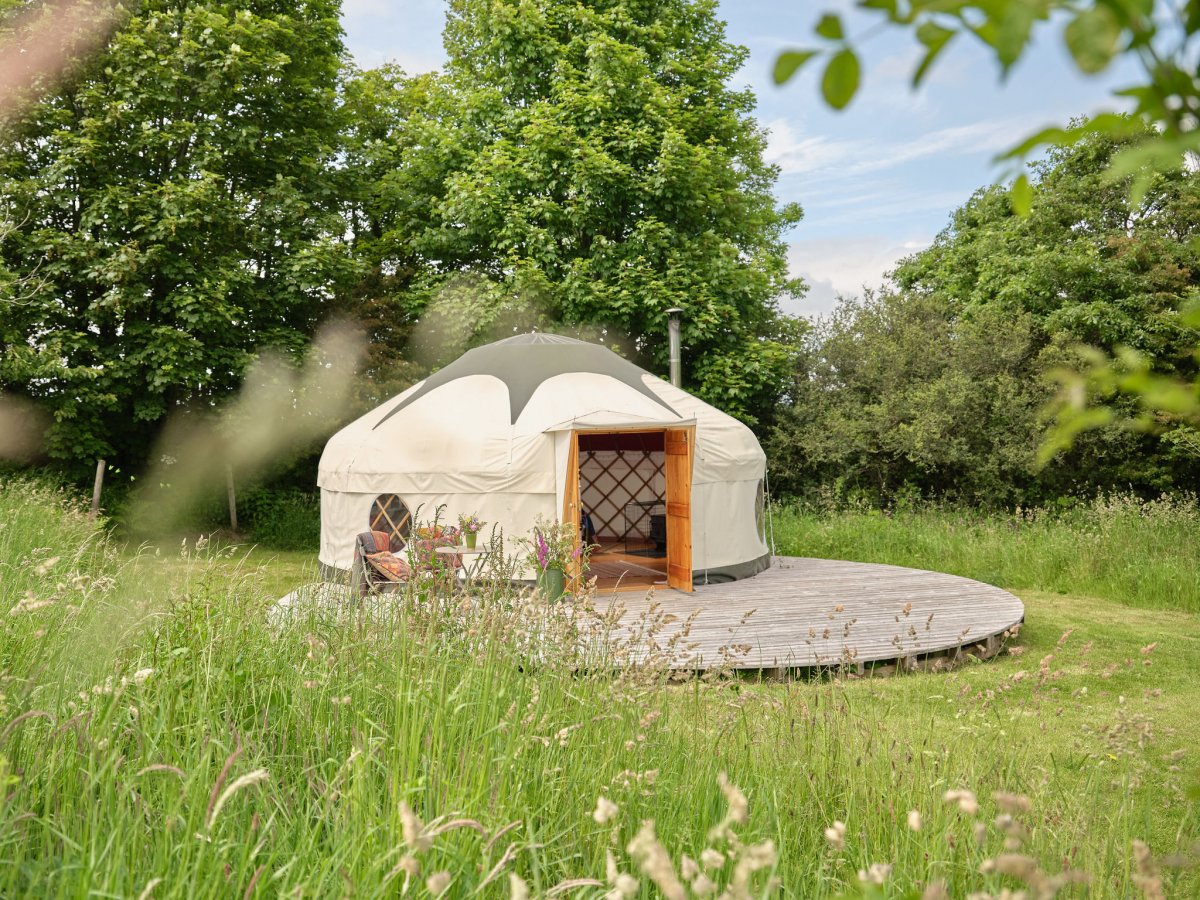
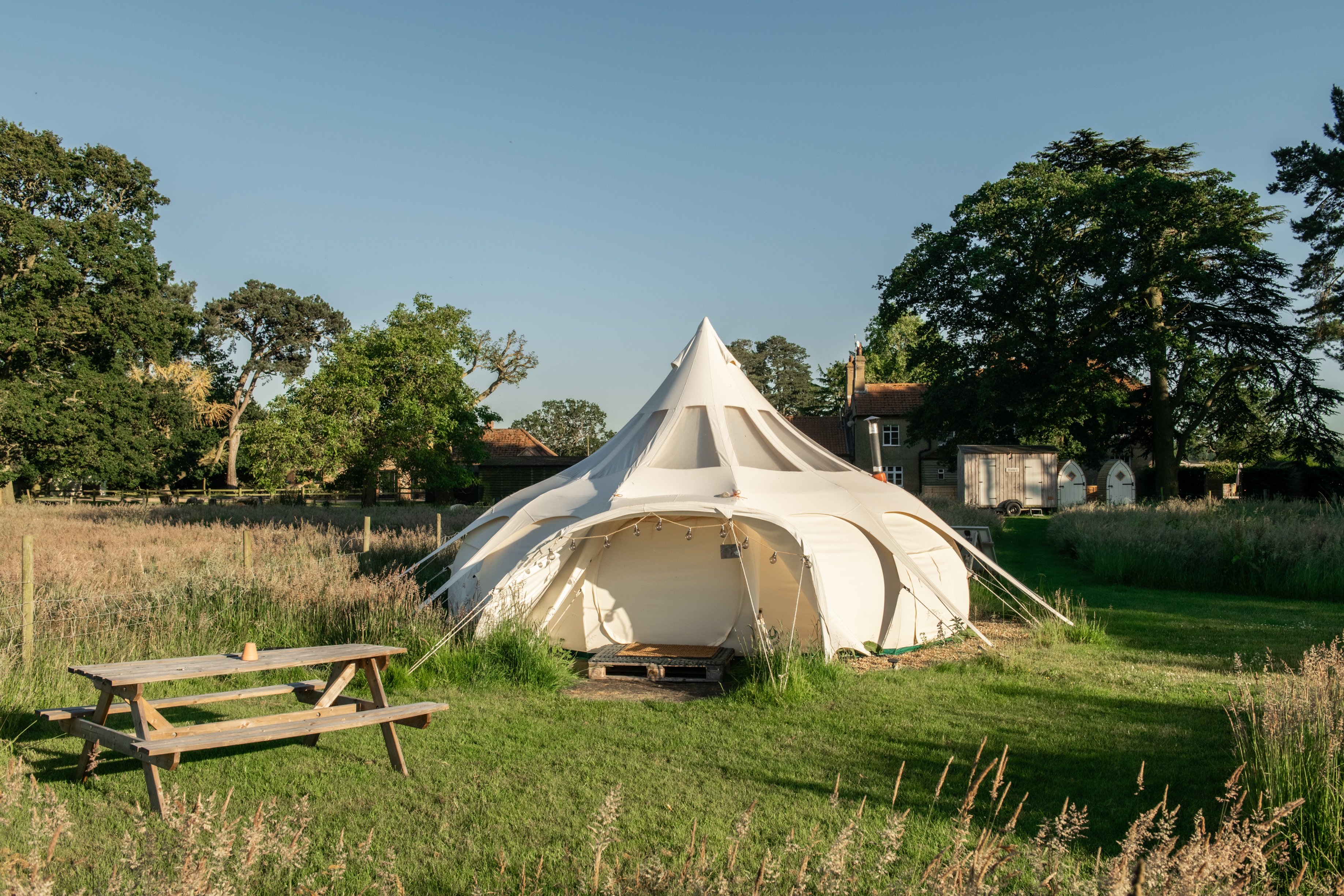
The report asked consumers about their preferences for future stays. Luxury treehouses topped the list at 26%, followed by yurts and bell tents with luxury amenities (24%), luxury safari tents and lodges (23%), eco-friendly or off-grid cabins (23%), shepherd’s huts (19%), converted unique vehicles (19%), and architectural design cabins (18%).
For those of us in the group space, the interest in treehouses, safari lodges, and eco-cabins is notable. If you’re a landowner considering diversification, or an existing operator thinking about adding units, these categories offer strong positioning — especially at the premium end where higher-income groups drive disproportionate demand.
Five Strategic Priorities For Glamping Sites For The Next Five Years
The report distils everything into five priorities, and they’re worth keeping front of mind:
1. Lead with quality, not quantity. A smaller number of premium stays can generate better revenue and stronger reviews than high volume at lower rates. Invest in the details.
2. Build an experiences layer. Partner with local providers to create compelling add-on packages. These increase the average booking value without needing more capacity.
3. Target high-value segments. 78% of individuals earning over £83,000 per year are engaged with glamping. Know which audience you’re targeting and price accordingly.
4. Invest in your digital presence. AI-powered discovery is growing. Detailed listings, strong reviews, rich photography, and accurate content all matter more than ever. Work with platforms that prioritise search visibility.
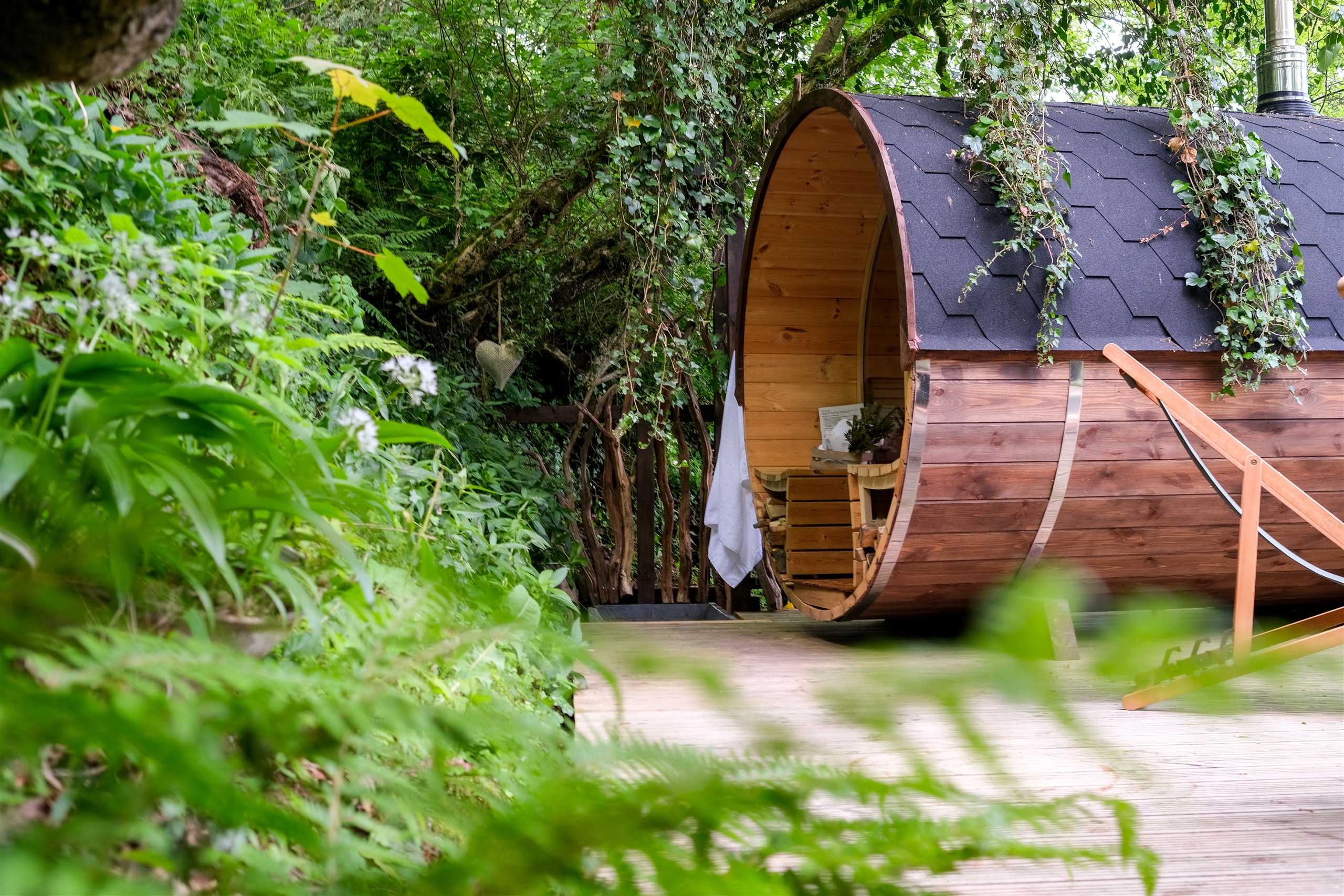
5. Plan for future demand. Quality bedding and hot tubs matter now. Saunas, cold plunge pools, EV charging, outdoor kitchens, and pet-friendly provision are where demand is heading.
What We Take From This At GroupAccommodation.com
At GroupAccommodation.com, we’ve been in the large holiday rental space for over 20 years. A lot of what this report surfaces confirms what we see in our own data and conversations with property owners every day. Guests are more discerning than ever. They’re willing to pay for quality, but they expect to see it — in your listing, in your reviews, and in person when they arrive. The properties that thrive are the ones that know their audience, invest in the right amenities, and treat every booking as a chance to earn a recommendation.
If you own a large property — whether it’s a traditional cottage, a converted barn, a glamping estate, or something genuinely unique — the market conditions over the next five years are in your favour. The demand is there. The willingness to pay a premium is there. The shift toward domestic travel is there.
The question is whether your property, your listing, and your guest experience are ready to meet it.
Want more direct bookings?
Talk to us about listing your glamping property on GroupAccommodation.com
Data and findings referenced in this post are drawn from the Glampingstays Glamping Trends Report (2026), which combines a Trajectory consumer survey of 1,502 UK adults, five years of Travel Chapter booking data, and ten macro trend frameworks developed by Trajectory.
Related Posts

Nottinghamshire School Term Dates & School Holidays (2025 – 2026)
Planning a group getaway or family holiday? Knowing the Nottinghamshire school term dates can help you avoid peak times and make the most of your break. Here’s a breakdown of the Nottinghamshire school holidays and...

Bank Holidays in 2027 Across the UK and Ireland
As we look forward to 2027, now’s the perfect time to strategically plan your time off and make the most of the bank holidays dotted throughout the year. Whether you’re hoping to squeeze in a...

Top 5 Tips For Organising Group Coach Travel
Planning some group travel? Consider booking coach travel to save time and money for your group.

4 Ideas For Large Holiday Villas And Fincas In Spain
Looking for a large group holiday house in Spain? Choose from a wide range of seaside and country properties here.

9 Stays Ideal for Fishing Groups
Planning a fishing trip with friends or family? Across the UK and Ireland you’ll find fantastic properties that are perfectly suited to anglers. From rural retreats with private lakes or rivers on site, to large...