

For a large holiday rental, Airbnb and Booking.com now cost almost the same in headline commission: Airbnb’s single host fee is 15.5%, while Booking.com charges between 10% and 25% depending on property type and location, with around 15% typical in the UK. The real difference lies in the extras, how each platform treats groups, and how much control you keep over the guests sleeping under your roof.
That is a big shift from even a year ago. Airbnb has spent 2025 and 2026 phasing out its old split-fee model, and UK hosts were moved to a single host-only fee in June 2026. Booking.com has always charged hosts a single commission. For the first time, the two giants are structurally alike.
For owners of a two-bedroom cottage, the choice between them is often a coin toss. For owners of a converted barn, manor house or country estate sleeping 12, 20 or 30 guests, it is not. Booking values are several times higher, so every percentage point matters. Groups bring different risks, from hen and stag weekends to multi-generational reunions. Neither platform was designed with a 10-bedroom house in mind – you can’t currently search for more than 16 guests on Airbnb!
I have spent years talking to large property owners about their channel mix, and I have previously written about why Airbnb is not built for large-group holiday lets. This guide takes a wider view: what each platform actually costs a large property in 2026, where each one genuinely helps, and where each falls short.
Who This Airbnb vs Booking.com Guide Is For
- Owners and managers of holiday homes sleeping eight or more guests
- Hosts of party houses, wedding venues, retreat venues and country estates
- New hosts deciding which OTA to list on first
- Established owners reviewing their channel mix after Airbnb’s 2026 fee change
Airbnb vs Booking.com Commission for Large Holiday Rentals in 2026
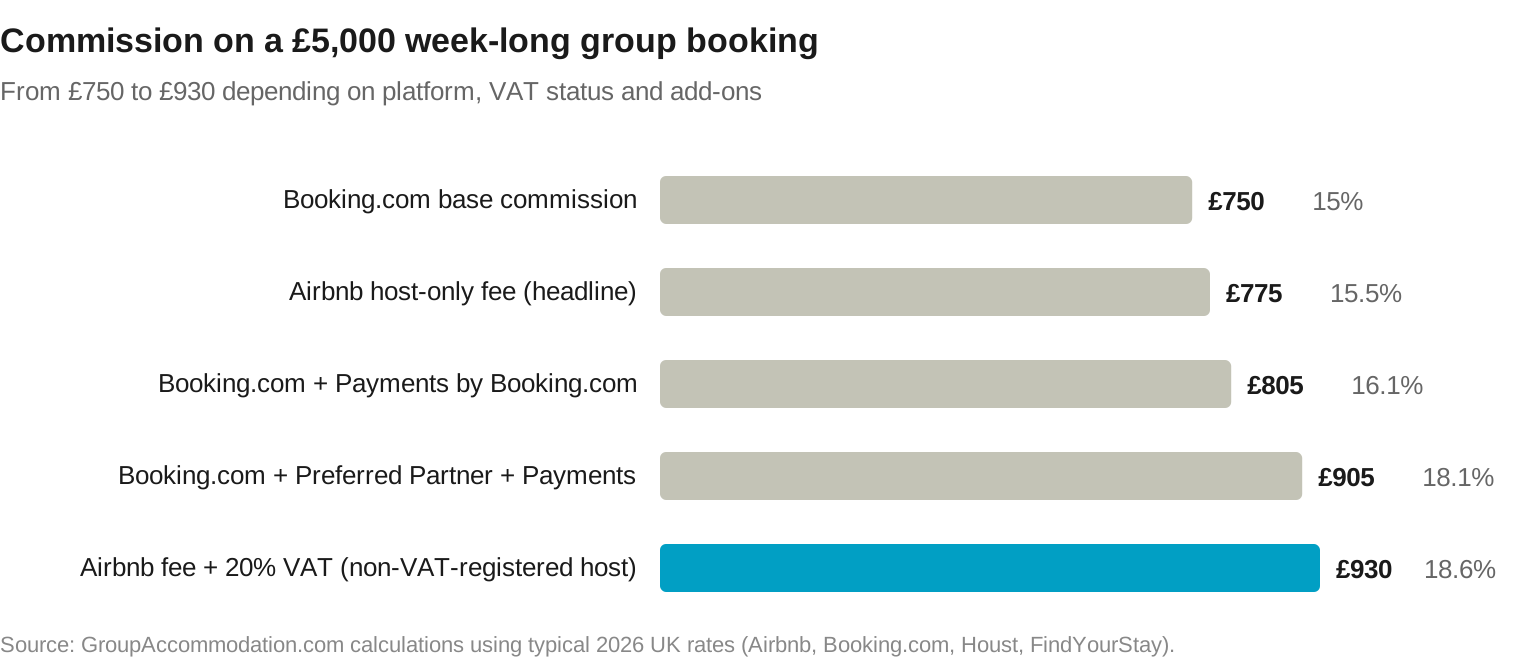
On headline rates, Booking.com (around 15%) and Airbnb (15.5%) are now within half a percentage point of each other. Once VAT, payment processing and visibility programmes are added, a UK owner of a large holiday home can expect to hand over somewhere between 15% and 19% of every booking to either platform.
How the Airbnb Host-Only Fee Works in 2026
Airbnb historically split its fee: hosts paid around 3% and guests paid a separate service charge of roughly 14% to 16.5% at checkout. That model is now gone. Airbnb has moved almost every host onto a single 15.5% fee deducted from the payout, with UK hosts switched over on 22 June 2026 and the final global waves completing on 15 September (outside the EU) and 13 October 2026 (inside the EU).
Three details matter far more for large properties than for small ones:
- The fee applies to the whole booking subtotal, cleaning fee included. A large house with a £400 changeover charge pays commission on that too.
- VAT is added on top for many UK hosts. Owners who are not VAT-registered pay 20% VAT on Airbnb’s fee, taking the effective rate to around 18.6%.
- Long-stay protection has gone. Under the old model, the guest-side fee was reduced on stays of 28 nights or more. The host-only fee now applies in full to discounted monthly stays, which affects owners taking contractor or relocation groups.
If you have not adjusted your Airbnb pricing since the switch, you have effectively taken a pay cut of around 12.5 percentage points on every booking.
How Booking.com Commission Works for Holiday Homes
Booking.com has always charged hosts a single commission and no guest service fee. UK rates for most independent properties sit at roughly 15%, although the platform sets rates property by property and they range from about 10% to 25% globally.
The headline figure is the floor, not the ceiling:
- Payments by Booking.com adds a processing charge of roughly 1.1% to 3.1% per booking if Booking.com collects payment on your behalf.
- The Preferred Partner programme adds around 2% to 3% extra commission in exchange for a badge and a ranking boost.
- Genius discounts of 10% or more are funded by the host, while commission is still calculated on the full rate.
One 2026 industry breakdown of UK accommodation suggests most independents actually pay between 17% and 22% once these programmes are counted. Booking.com commission is also invoiced monthly in arrears rather than deducted at source when you collect payment yourself, which suits some owners’ cash flow better than Airbnb’s model.
What Commission Costs a Large Holiday Home Over a Year
The percentages look similar, but for a property turning over £80,000 or more a year, a two or three point gap is worth thousands of pounds. The table below applies the typical effective rates above to three annual turnover levels for a large group house.
| Annual booking turnover | Airbnb (18.6% incl. VAT) | Booking.com (16.1% incl. payments) | Booking.com (18.1% with Preferred Partner) | Commission-free listing on GroupAccommodation.com (from £540 incl. VAT) |
|---|---|---|---|---|
| £40,000 | £7,440 | £6,440 | £7,240 | £540 |
| £80,000 | £14,880 | £12,880 | £14,480 | £540 |
| £120,000 | £22,320 | £19,320 | £21,720 | £540 |
The final column uses the entry-level annual subscription on GroupAccommodation.com, where guests enquire and book directly with the owner. It is shown for comparison because it is the cost model many large property owners run alongside the OTAs. For a longer look at how commission-based and subscription-based models compare, see our guide to the average commission fee charged by holiday letting agencies.
Airbnb for Large Group Holiday Rentals: Pros and Cons
Airbnb remains the best-known name in holiday rentals and brings genuine reach to a large property. Its rules, however, were written around the average listing, and many of them sit awkwardly with a house that sleeps 20.
What Airbnb Does Well for Large Properties
Brand Recognition and Guest Trust
Groups planning a celebration often start their search on Airbnb because the lead booker already has an account and trusts the checkout. For a property that is new to the market, that familiarity can fill a calendar quickly.
Damage Protection Through AirCover for Hosts
Every Airbnb booking includes AirCover for Hosts, which offers up to $3 million in host damage protection and $1 million in host liability insurance at no extra cost. In the UK, the liability element is underwritten by Zurich. For a large house hosting a 30th birthday weekend, that backstop is genuinely reassuring.
Simple Pricing for Guests
With the guest service fee removed, the price a group sees in search is now much closer to the price they pay. That makes it easier for a lead booker to split costs across a group chat without a surprise at checkout.
Guest Profiles and Two-Way Reviews
Verified guest identities and a review history give owners some signal about who is booking before a large group arrives.
Where Airbnb Falls Short for Large Group Houses
No Traditional Security Deposit
Most Airbnb hosts can no longer take a security deposit, with a narrow exception for some hosts using approved property management software. Damage is handled through a claims process in the Resolution Center, which must be opened within 14 days of checkout. For a large group house, a deposit held before arrival changes behaviour in a way that a retrospective claim never will.
The Party Ban and Group Suspicion
Airbnb made its ban on parties and events permanent in 2022. Hosts can now opt in to allow small gatherings, but only up to 25 people. The platform also uses automated screening to flag bookings that look like parties, which can catch legitimate hen weekends, family reunions or sten parties in the net.
Guest Count Limits in Search
Airbnb introduced a 16-guest cap during the pandemic. It announced the cap would be lifted in 2022, yet owners of larger properties still report guests hitting the 16 limit at checkout in some markets, with the workaround being a manual special offer. Every extra step in the booking journey loses some enquiries.
You still cannot search for more than 16 guests on the Airbnb app or website.
Limited Contact Before Booking
Airbnb restricts the exchange of contact details before a reservation is confirmed. Large bookings often need a phone call to talk through sleeping arrangements, catering or event plans, and the platform makes that harder.
Commission on Every Pound, Including Repeat Guests
The 15.5% fee applies to the cleaning fee, any extras and every repeat booking made through the platform. A family that returns every Christmas will pay Airbnb every single year. The guest relationship belongs to the platform.
Rising Local Scrutiny of Party Houses
Large group houses are increasingly in the spotlight, from UK villages pushing back against party houses to US cities introducing occupancy caps. Airbnb’s response tends to be platform-wide rules rather than nuance for well-run large properties, so responsible owners can be caught by measures aimed at problem listings.
Booking.com for Large Holiday Homes: Pros and Cons
Booking.com grew up as a hotel platform and still behaves like one. That brings some real advantages for large property owners, particularly around deposits and payment control, alongside a guest profile and booking style that suit some group houses far better than others.
What Booking.com Does Well for Large Group Properties
Owners Can Still Take a Damage Deposit
This is the single biggest practical difference for large properties. Booking.com lets hosts choose between collecting and returning their own damage deposit or enrolling in the platform’s damage programme, where Booking.com contacts the guest on the host’s behalf if something is broken. For a house sleeping 20, the ability to hold a meaningful deposit before arrival is a real advantage.
More Control Over Payment Timing
Owners who do not use Payments by Booking.com can collect payment directly, by bank transfer or at check-in, and are invoiced for commission the following month. That keeps the money in your account sooner and avoids the processing charge, although it adds administration.
No Guest Service Fee
Booking.com has never charged guests a service fee, so the price displayed in search is the price the guest pays, excluding any local taxes.
Huge International Reach
Booking.com is particularly strong with European travellers and business bookers. For large villas in Spain, France or Portugal, or country houses that host corporate offsites, that audience can be valuable.
Where Booking.com Falls Short for Group Accommodation
A Hotel-Style Platform Built for Rooms, Not Whole Houses
The Booking.com extranet, search filters and guest expectations are shaped around hotel rooms. Whole-property listings sleeping 16 or more can sit uneasily in results sorted by price per night, where a £1,500-a-night manor house appears next to a £90 guesthouse.
Instant Booking and Limited Screening
Booking.com is built around instant confirmation. Large group owners often want to understand who is coming and why before accepting, and the platform offers far less room for that conversation than a direct enquiry.
Cancellation Culture
Guests on Booking.com are used to free cancellation. Group bookings are high value and often made months in advance, so a late cancellation of a £8,000 week can be hard to re-let. Owners need to set firm prepayment and cancellation terms and accept that some guests will filter them out.
Hidden Extras That Push Up the Real Commission
Preferred Partner status, Genius discounts and payment processing each chip away at your margin. Individually they look small, but together they can push the effective rate above Airbnb’s.
The Guest Relationship Still Belongs to the Platform
As with Airbnb, repeat guests booking through Booking.com pay commission every time, and the platform discourages hosts from moving guests to direct channels.
Airbnb vs Booking.com Side by Side: Which Is Better for Large Group Bookings?
Neither platform is clearly better for every large property. Airbnb tends to suit celebration houses aimed at UK friendship and family groups who want a simple checkout. Booking.com tends to suit villas and country houses with an international or corporate audience, and owners who want to hold a proper damage deposit.
| Feature | Airbnb | Booking.com |
|---|---|---|
| Host commission (2026 headline) | 15.5% host-only fee | Around 15% in the UK (10% to 25% globally) |
| Typical effective UK rate | Around 18.6% for non-VAT-registered hosts | Around 16% to 22% with payments and visibility programmes |
| Guest service fee | None since the host-only switch | None |
| Commission charged on cleaning fee | Yes | Yes |
| Security or damage deposit | Not allowed for most hosts | Allowed, or opt into the damage programme |
| Damage protection | AirCover: up to $3m damage, $1m liability | Damage programme; deposit managed by host |
| Parties and events | Banned by default; opt-in gatherings capped at 25 | Set by host through house rules |
| Pre-booking contact with guests | Restricted | Limited, mostly after booking |
| Payment collection | Airbnb collects and pays out | Booking.com collects, or host collects directly |
| Best suited to | UK celebration and family groups | International, corporate and villa guests |
Can You List a Large Holiday Home on Both Airbnb and Booking.com?
Yes, and many professionally run large properties do. Calendars can be synced between the two platforms using iCal links or a channel manager, which avoids double bookings. The trade-off is that you then work within two commission structures, manage two sets of house rules and price separately for each channel.
The smartest owners treat the OTAs as a marketing expense to acquire first-time guests, then work hard to bring repeat and referral business onto direct channels.
The Third Option: Direct Bookings for Large Holiday Rentals
The Airbnb vs Booking.com debate often misses the fact that large group houses were taking bookings long before either platform existed. Experienced owners of big properties are returning to that model, and newer hosts are discovering that direct bookings are simply more profitable.
Why Direct Bookings Suit Large Group Properties
- Booking values are high. On a £5,000 week, even a 16% commission is £800. Over a year, that is typically the difference between a flat listing fee and five figures in commission.
- Groups want to talk first. Lead bookers organising a wedding weekend, corporate offsite or multi-generational holiday usually have questions about bedrooms, catering and access. A direct conversation converts better than a booking engine.
- You set the terms. Damage deposits, cancellation policies, group rules and whether to accept hen or stag bookings are your decisions, not an algorithm’s.
- Repeat guests cost nothing. A family that returns every Easter books with you directly, year after year, with no commission on the rebooking.
Our own data shows how much large groups are growing. We looked at this in detail in the rise of the holiday mega-group and our 2025 year in review of group accommodation booking trends.
How to Build a Balanced Channel Mix
- List on a specialist direct booking platform for large properties, where guests enquire with you directly and there is no commission.
- Use one OTA selectively to fill quieter midweek and shoulder-season dates, pricing it to cover the commission.
- Capture every guest’s contact details and invite them to rebook directly.
- Sync your calendars so that every channel shows accurate availability.
For more on the alternatives, see the best Airbnb alternative for large properties and direct bookings and our round-up of direct booking platforms and Airbnb alternatives.
Airbnb vs Booking.com FAQs for Holiday Rental Owners
For large holiday homes, neither is universally better. Airbnb is usually stronger for UK celebration and family groups, while Booking.com suits international, corporate and villa guests and lets you take a damage deposit. Headline commission is now almost identical at around 15% to 15.5%.
Most independent UK properties pay a base commission of about 15%, calculated on the total booking value including cleaning fees. Payment processing adds roughly 1.1% to 3.1% if Booking.com collects payment, and Preferred Partner status adds around 2% to 3%.
Airbnb takes a 15.5% host-only fee from the booking subtotal, including the cleaning fee. UK hosts who are not VAT-registered also pay VAT on that fee, bringing the effective rate to roughly 18.6%.
Since Airbnb removed its guest service fee, neither platform adds a charge at checkout, so the difference now comes down to how each host prices each channel. Many hosts have raised Airbnb prices to absorb the new fee, which means the same property can cost more on one site than the other.
Yes. There is no exclusivity on either platform. You will need to create a separate Booking.com listing and keep calendars synchronised to avoid double bookings.
Both platforms support iCal. Export the calendar link from one platform and import it into the other, in both directions. iCal updates are not instant, so owners with busy calendars often use a channel manager or property management system instead.
Most Airbnb hosts cannot take a security deposit and rely on AirCover claims instead. Booking.com allows hosts to collect their own damage deposit or enrol in its damage programme.
Booking.com’s damage programme helps hosts recover costs from guests, and in the US it offers a separate host property insurance product. UK owners should hold specialist holiday let insurance regardless of which platform they use.
Hosts can request a cancellation, typically for reasons such as a guest failing to pay a prepayment or a suspected fraudulent booking. Cancelling without good reason can hurt your ranking, so it is better to set clear house rules and prepayment terms up front.
Airbnb said it would lift its pandemic-era 16-guest cap in 2022. Some owners of larger properties still report guests being limited to 16 at checkout in certain markets, with hosts using a special offer to confirm the true group size. You still cannot search for properties that sleep more than 16 guests on Airbnb.
Most owners of properties sleeping eight or more use a mix: a specialist group accommodation platform for commission-free direct enquiries, plus one or both OTAs for extra reach. Browse large properties in England, Wales and Scotland to see how other owners present their houses.
Take More Direct Bookings for Your Large Holiday Rental
Airbnb and Booking.com both have a place in a large property’s marketing, but at 15% to 19% of every booking, neither should be the whole plan. GroupAccommodation.com has specialised in holiday homes sleeping eight or more since 2003. Guests enquire with you directly, you set your own rules and deposits, and there is no commission to pay, just a simple annual subscription.
If you own a large group house, barn conversion, country estate or villa, get in touch with our team to find out how many direct enquiries your property could attract.
Data note: Airbnb fee structure and migration dates are drawn from Hostaway, Hospitable and Rental Scale-Up. Booking.com commission ranges draw on Houst, Guesty, and Otterly Booked. AirCover details are taken from Airbnb’s own help centre, and Booking.com damage policy details from Booking.com for Partners. Effective rates and worked examples are illustrative calculations by GroupAccommodation.com using typical 2026 UK rates; individual commission rates vary by property. All figures correct as of 30 September 2026.
Related Posts

A Holiday Guide to Cornwall and Devon
Cornwall & Devon have some of the UK’s most beautiful coastline, and wonderful attractions for family day’s out. We have carefully selected some things to do.

Hidden River: A Secluded Escape in the Heart of Cumbria
Nestled in the countryside just north of Carlisle, Hidden River Cabins and Hidden River House offer a unique blend of rustic charm and modern comforts, making it an ideal getaway for families, friends, and couples...

You May Never Have to Pay For Your Renewal Ever Again!
As one of our current advertisers, if you introduce us to an owner who joins us, we will extend your current 12 month subscription by a further 3 months!

What Are The Benefits Of Using A Holiday Rental Advertising Site
Holiday rental advertising sites charge an annual or monthly fee, rather than commission, meaning you can take home more of your profit.

Newly Listed Group Accommodation for May 2026
With summer well on the way we have some fantastic properties joining us this month — from country estates to a collection of cottages in the wonderful Witterings on the south coast. If you’re looking...